main-dishes
Smoked BBQ Ribs (3–2–1 Method)
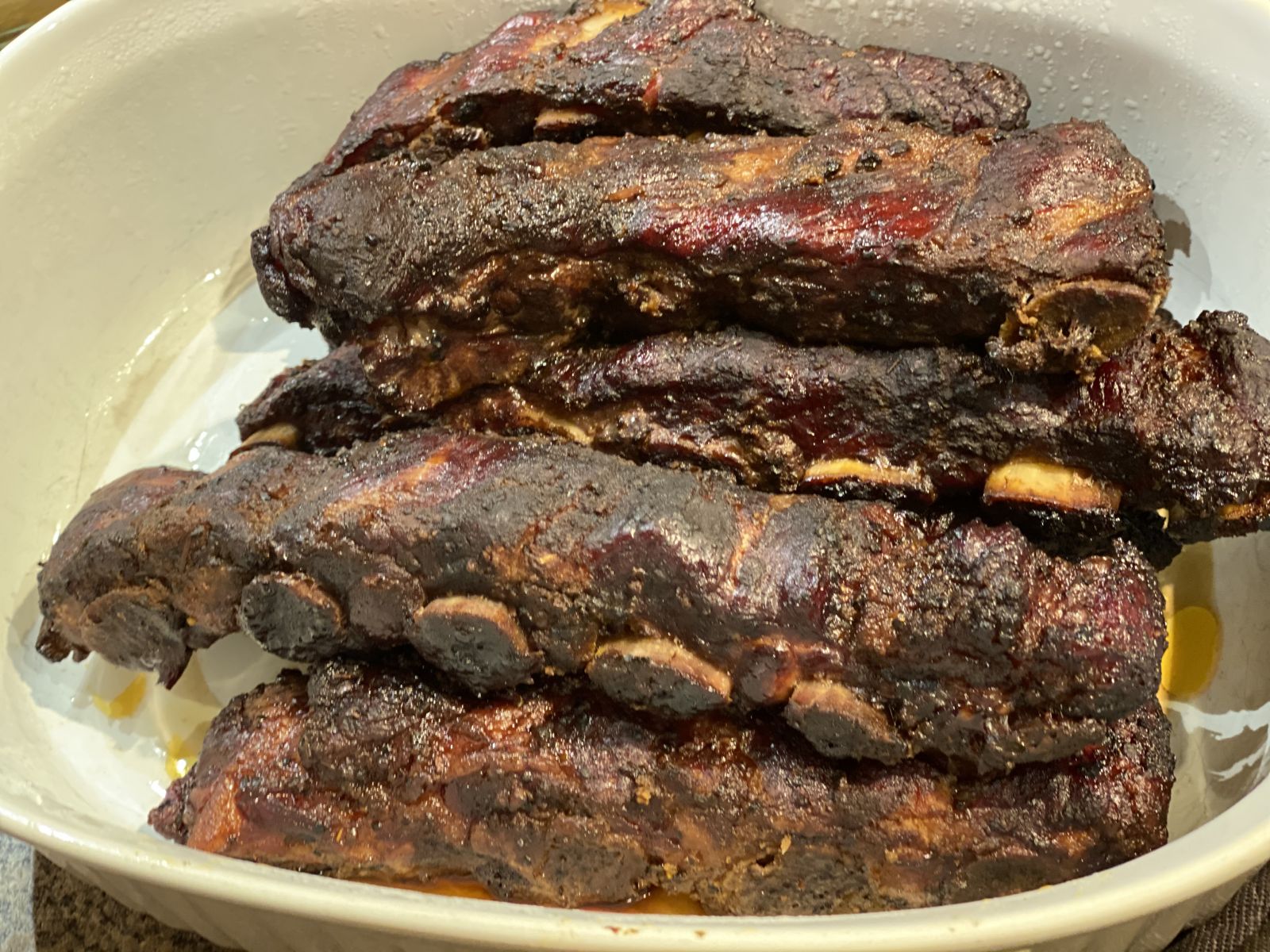
These Smoked BBQ Ribs are everything summer should taste like: racks of pork ribs coated in a generous BBQ rub, kissed with wood smoke, steamed until tender, and finished with a glossy layer of sauce. Using the classic 3–2–1 method, the ribs spend three hours in low-and-slow smoke to build flavor, two hours wrapped tightly with a splash of beer to tenderize and steam, and a final hour back in the smoker slathered in sauce. The result is meat so tender you can pull it off the bone with your fingers, with deep smoky flavor and a balance of rub and sauce in every bite. It’s a nearly foolproof technique that turns even first-time grillers into rib masters—perfect for backyard gatherings, cookouts, and long lazy evenings at RizzieFarms.
Ingredients
Ribs & Seasoning
- Racks of pork ribs (each rack serves about 2–3 people)
- BBQ rub, to taste
- Beer (about 1/4 cup per rack)
- BBQ sauce, as desired
For Smoking (Optional but Recommended)
- Wood chips or chunks for smoking (such as pecan, hickory, apple, or cherry), as needed
- Water for soaking wood chips (if using a smoker box or gas grill)
Instructions
- Prepare the smoker and ribs: Preheat your smoker to 225°F for low-and-slow cooking. While the smoker heats, pat your racks of pork ribs dry with paper towels and generously coat both sides of each rack with BBQ rub, to taste, pressing the rub into the meat so it adheres well. If using wood chips, soak the wood chips or chunks in water according to your smoker’s instructions.
- Stage 3 – Smoke for 3 hours: Place the BBQ-rubbed racks of pork ribs in the smoker, bone side down, and add your wood chips or chunks (such as pecan, hickory, apple, or cherry) to the smoker. Smoke at 225°F for about 3 hours for spare ribs (or about 2 hours for back ribs), keeping the ribs coated with the original BBQ rub and maintaining steady low heat to avoid drying them out.
- Stage 2 – Wrap with beer for 2 hours: Lay out sheets of heavy-duty foil, one for each rack of pork ribs. Transfer each rack from the smoker onto its foil sheet, bone side down. Pour about 1/4 cup beer per rack over the ribs to help steam and tenderize them, then wrap the foil tightly around each rack to seal in the moisture. Return the foil-wrapped ribs to the 225°F smoker (or place them in a 225°F oven) and cook for 2 hours, allowing the ribs to steam in the beer and remaining BBQ rub.
- Stage 1 – Sauce for 1 hour: Carefully remove the foil-wrapped racks of pork ribs from the smoker or oven and unwrap them, discarding the foil and any excess liquid. Brush both sides of each rack generously with BBQ sauce, as desired, coating over the existing BBQ rub and beer-infused surface. Return the sauced racks to the smoker or oven, meat side up, and cook at 225°F for a final 1 hour to set the BBQ sauce and build a sticky, smoky glaze.
- Rest and serve: When the racks of sauced pork ribs are deeply colored, tender, and the meat pulls back from the bone, remove them from the heat. Let the ribs rest on a cutting board for 10–15 minutes so the juices redistribute through the BBQ-rubbed and sauced meat. Slice between the bones to separate the ribs and serve 2–3 ribs per person, with extra BBQ sauce on the side if desired.
Notes
- The 3–2–1 method translates to 3 hours of smoke, 2 hours wrapped, and 1 hour sauced; for back ribs, you can reduce the first smoke stage to 2 hours to prevent drying.
- Pecan, hickory, apple, and cherry woods all work well; pecan gives a balanced flavor that pairs beautifully with most BBQ rubs and sauces.
- If you do not have a dedicated smoker, you can use a gas grill with a smoker box or foil packet of wood chips and aim to keep the temperature around 225°F, though it may be harder to maintain consistent heat and heavy smoke.
- For extra caramelization, you can baste with more BBQ sauce during the last 15 minutes of the final hour.
- Ribs are done when they are tender and a toothpick slides between the bones with little resistance—time is a guide, but tenderness is the final test.